Understanding Restaurant Licensing Models in International Expansion
Restaurant licensing models continue playing a major role in global expansion strategies. As brands expand internationally, licensing structures help support market entry, operational scalability, and long-term growth across new territories.
What is a restaurant licensing model?
A restaurant licensing model typically allows an approved operator or organization to develop and operate locations under an established restaurant brand within a defined territory or commercial structure.
Licensing arrangements can vary significantly depending on market conditions, regulatory environments, operational requirements, and long-term expansion objectives.
Many global restaurant brands use licensing structures to accelerate expansion while leveraging local expertise and operational infrastructure.
Why brands use licensing structures
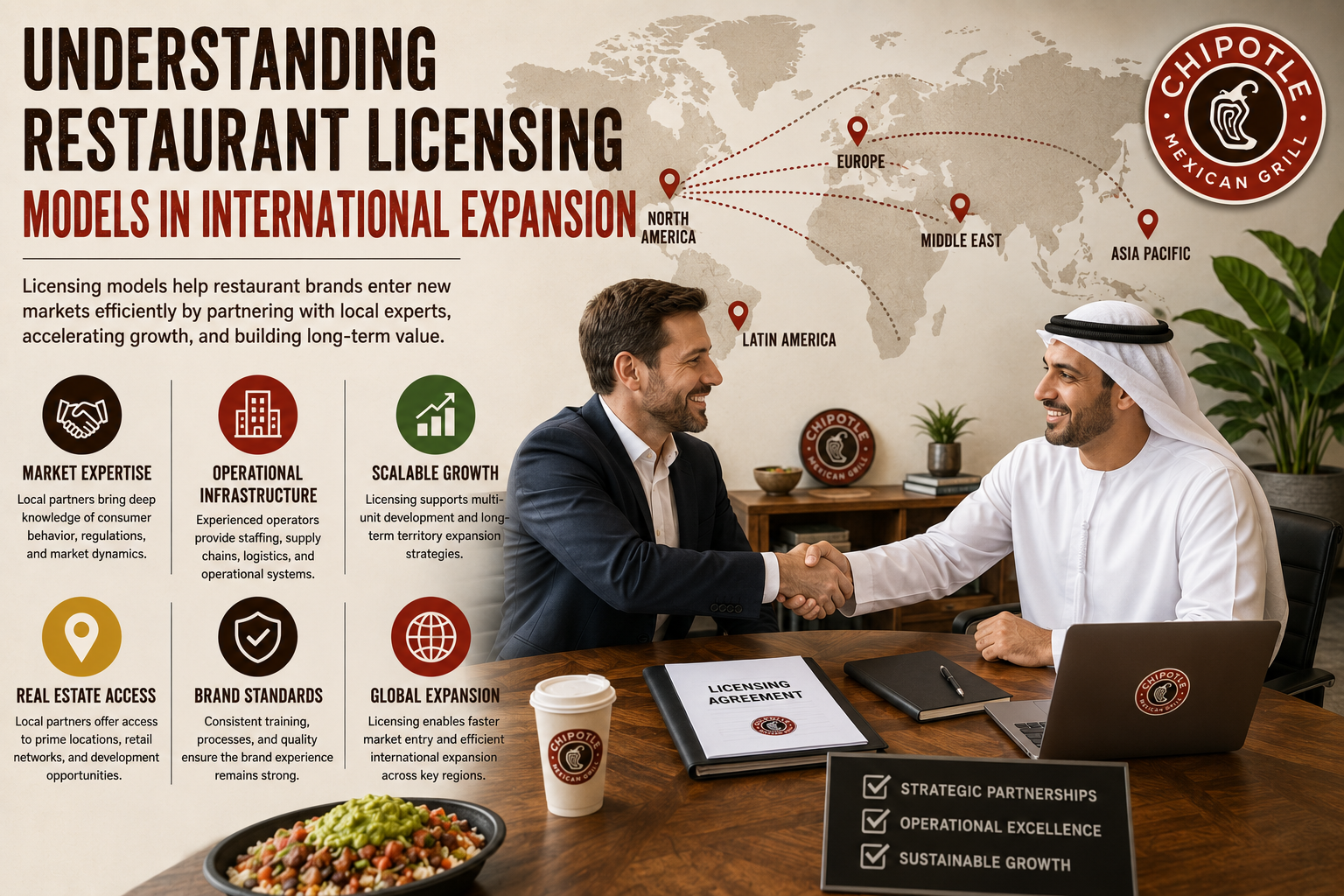
International expansion often requires local market knowledge, supply-chain capability, staffing infrastructure, and operational expertise. Licensing structures can help brands enter markets more efficiently while reducing operational complexity.
Local operators often understand consumer behavior, regulations, and commercial environments more effectively.
Experienced operators may already possess staffing systems, logistics capability, and supply-chain relationships.
Licensing can support multi-unit development and long-term territory expansion strategies.
How licensing differs from company-operated expansion
Some restaurant brands operate locations directly, while others use development agreements, licensing structures, joint ventures, or hybrid approaches depending on the market.
The right structure often depends on operational feasibility, strategic priorities, and local market conditions.
The importance of local operators
Strong local operators frequently play a central role in successful international expansion. Real estate access, staffing capability, logistics management, and regulatory understanding all contribute to long-term operational performance.
Even globally recognized restaurant brands depend heavily on operational consistency and strong local execution when entering new markets.
Real estate and licensing growth
Premium locations remain critical to restaurant performance. Licensing partners often provide valuable access to high-traffic retail environments, mixed-use developments, transportation hubs, and commercial districts.
Supply-chain and operational standards
Maintaining food quality, operational consistency, customer experience, and logistics capability remains essential during international expansion.
Brands typically evaluate whether local infrastructure can support long-term operational standards before entering new markets.
Why licensing continues growing globally
- International consumer demand continues increasing
- Urban retail development remains strong
- Fast-casual dining continues expanding globally
- Digital ordering supports scalability
- Experienced operators are seeking growth opportunities
- Global restaurant brands continue prioritizing strategic expansion
Conclusion
Restaurant licensing models remain an important part of global expansion strategies. By combining brand strength with local market expertise, licensing structures can help support scalable growth, operational efficiency, and long-term international development.
Explore Licensing Opportunities
Review licensing pathways, development structures, market-entry strategies, and international expansion opportunities.
Leave a Reply