Chipotle Real Estate Requirements: What Makes a Great Location?
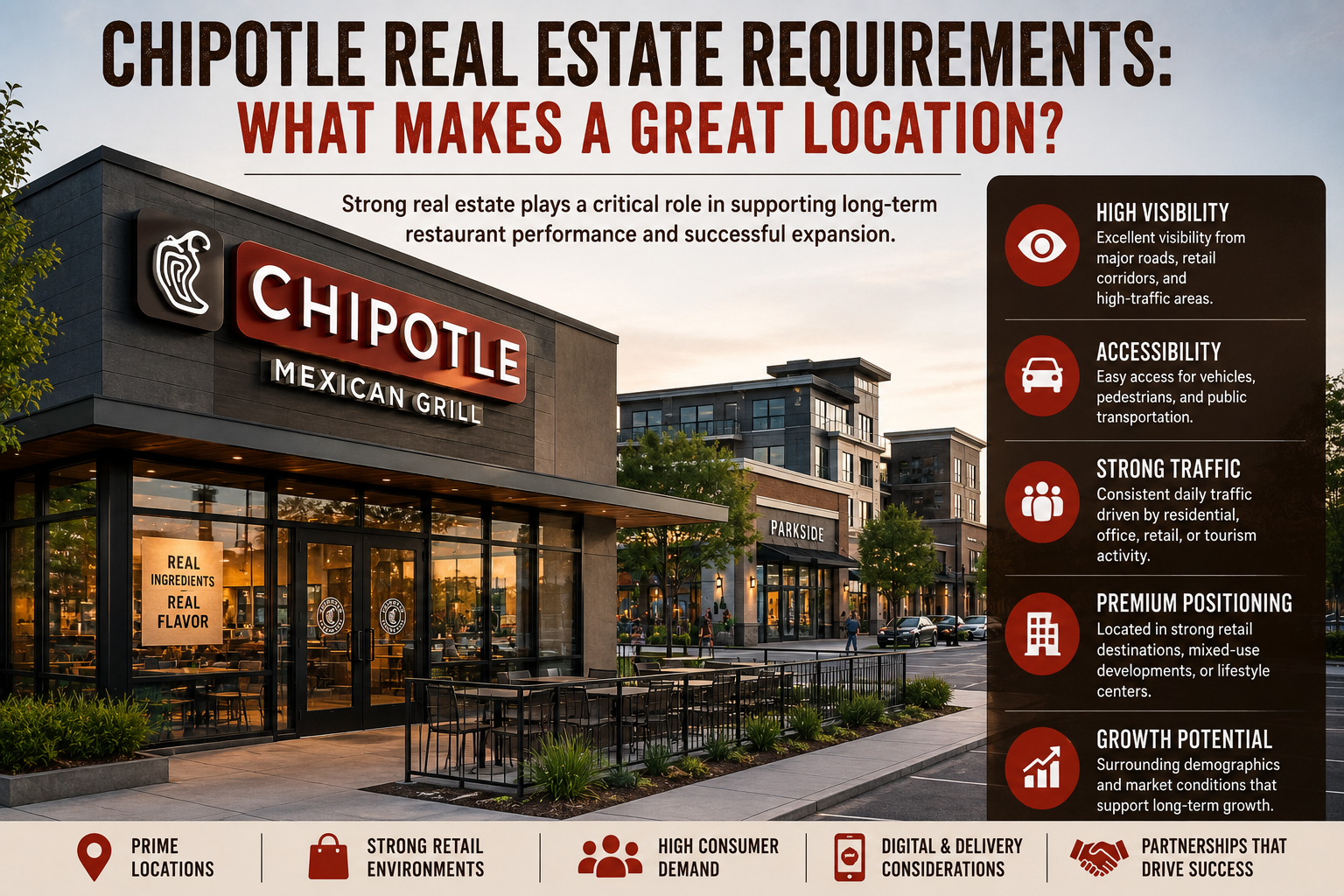
Location quality remains one of the most important drivers of restaurant performance. Successful Chipotle locations are typically supported by strong visibility, premium positioning, traffic accessibility, and surrounding consumer demand.
Why location matters
Restaurant brands depend heavily on consistent customer traffic, visibility, accessibility, and surrounding demographics. Strong locations can significantly improve operational performance and long-term scalability.
As international expansion continues, premium real estate remains one of the most competitive aspects of restaurant development.
Many high-performing restaurant locations benefit from strong traffic patterns, premium retail environments, and strategic positioning within major commercial districts.
Key characteristics of strong restaurant locations
Strong street presence and visibility from major roads, retail corridors, or commercial zones.
Convenient entry points, parking access, transportation connectivity, and pedestrian flow.
Consistent daily activity supported by residential, office, retail, or tourism demand.
Locations within strong retail destinations, mixed-use developments, or lifestyle centers.
Urban and mixed-use developments
Many successful restaurant concepts continue prioritizing urban districts, mixed-use projects, shopping destinations, transportation hubs, and high-density commercial environments.
These locations often provide stronger customer exposure and long-term scalability opportunities.
Drive-thru and digital demand
Modern restaurant expansion increasingly considers delivery logistics, mobile ordering, pickup accessibility, and digital convenience.
Locations that support operational efficiency and customer convenience can offer significant long-term advantages.
Digital ordering, pickup demand, delivery integration, and convenience-driven dining patterns are reshaping how restaurant brands evaluate locations.
Why demographics matter
Restaurant brands often evaluate surrounding population density, income levels, business activity, educational institutions, tourism patterns, and consumer spending behavior before selecting sites.
The importance of local real estate expertise
Local developers and real estate groups frequently play a major role in helping restaurant brands identify viable opportunities, secure premium locations, and navigate commercial market conditions.
What investors and landlords should understand
- Premium retail positioning remains highly valuable
- High-traffic corridors often outperform isolated sites
- Visibility and accessibility remain critical
- Digital infrastructure increasingly influences site value
- Long-term scalability matters
- Operational efficiency affects location selection
Conclusion
Strong restaurant real estate combines visibility, accessibility, traffic, demographics, and long-term commercial potential. As Chipotle and other major brands continue expanding internationally, premium locations remain central to successful market development strategies.
Submit a Real Estate Opportunity
Explore development pathways, market opportunities, and restaurant site submission discussions.
Leave a Reply